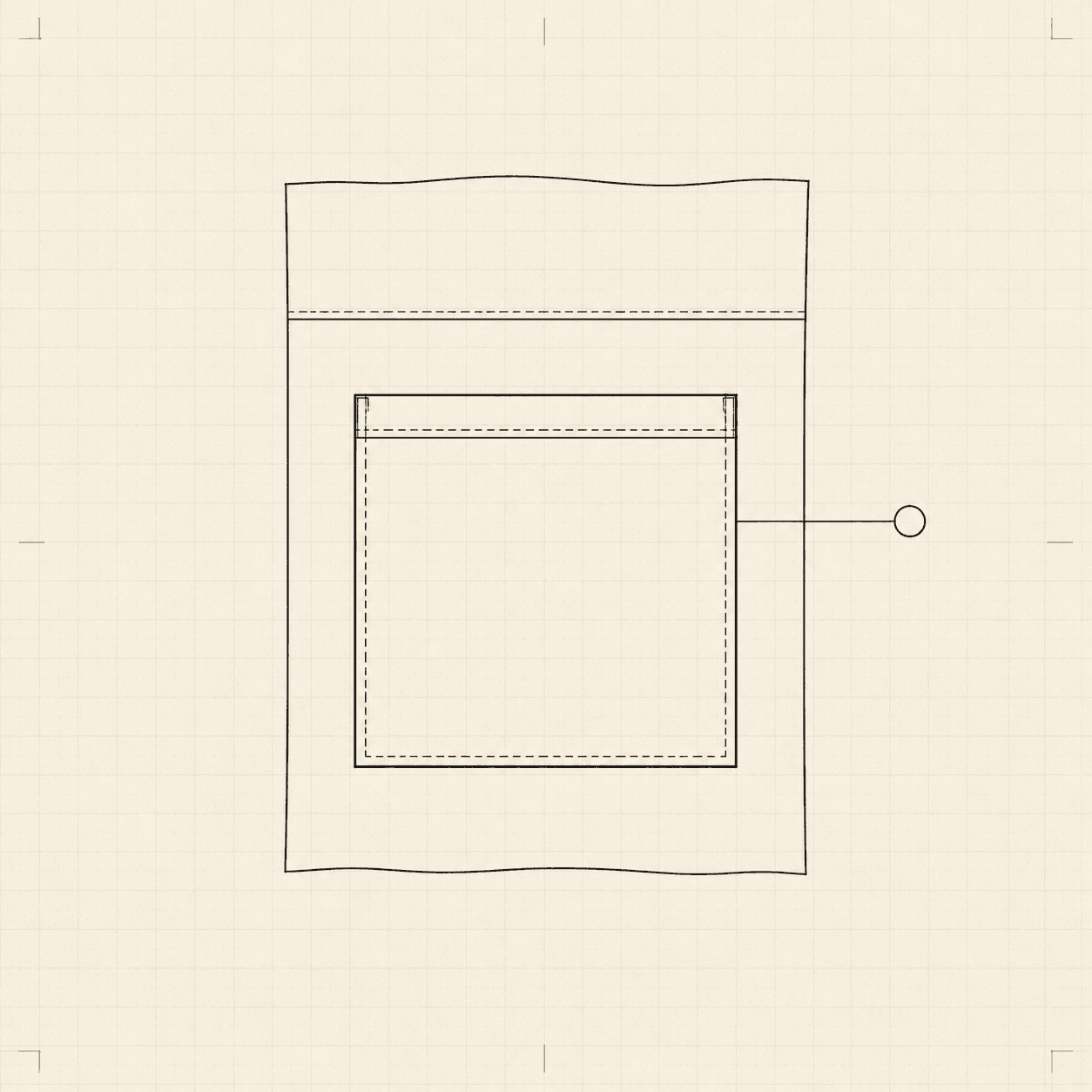
AS DRAWN
It can be made the way you drew it
Nothing about the geometry fights ordinary construction. That does not mean it is easy or cheap — it means the drawing does not have to move.
Feasibility read
Send one sketch and the thing you are stuck on. It comes back marked up, part by part: made as drawn, needs changing — and here is the change — or will not work, with the reason.
Never a verdict without its reason. That sentence is the whole service.
Three sketches a month, free · no card
A factory with different equipment may say something else. This tells you what is generally hard and why — take it as a question to ask, not a verdict.
Sketch sr-0001 · original preserved · annotation layer 0/6
AS DRAWN · collar
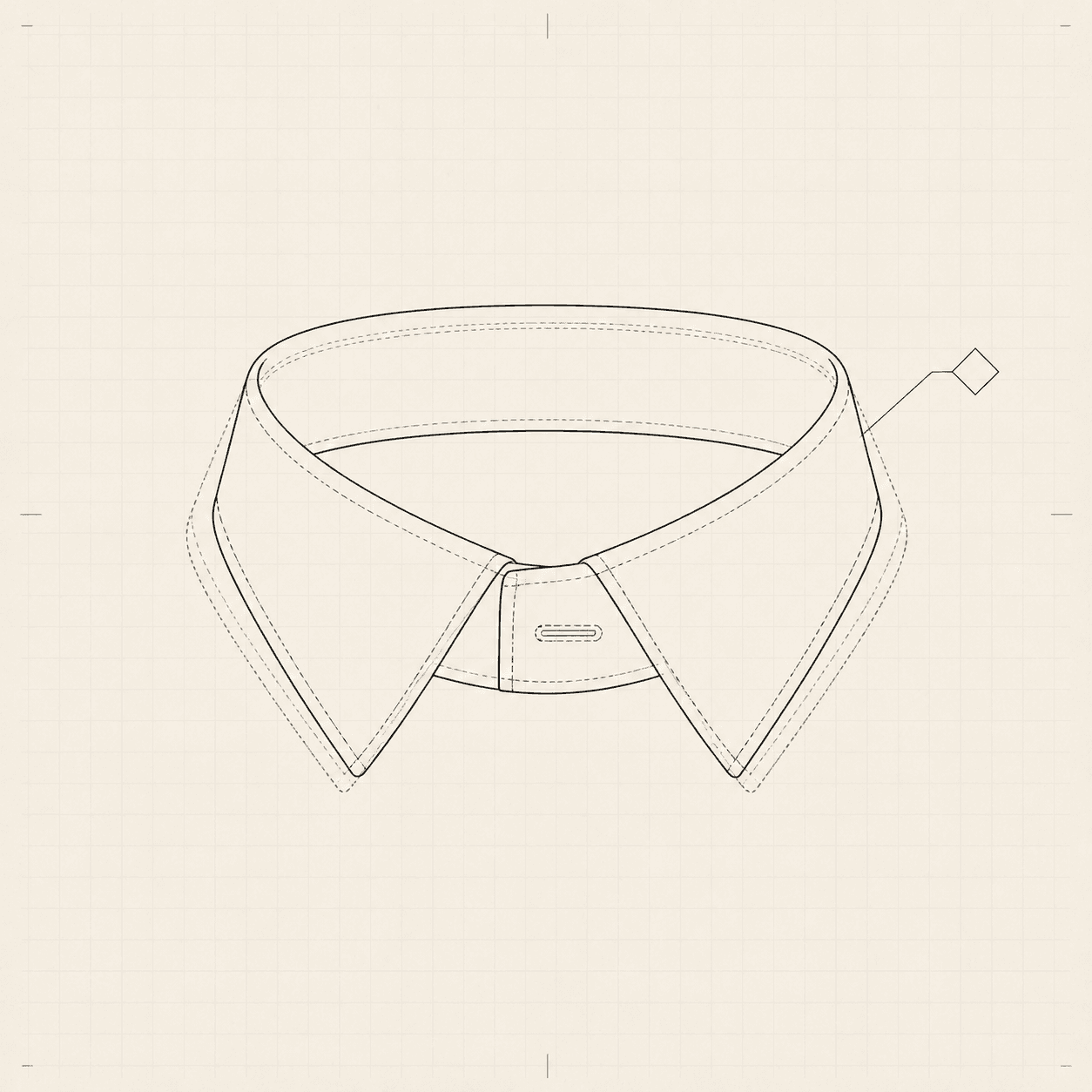
A faced neckline with no stand. The curve is shallow enough to turn and understitch without clipping through the seam line.
NEEDS CHANGE · armhole
The front underarm point sits lower than the back by about the width of one seam allowance, so the underarm seam rotates forward the moment anything is set into it.
Change
Raise the front underarm point until it is level with the back, then walk the armhole again and take the same amount out of whatever you set into it, so the two still match.
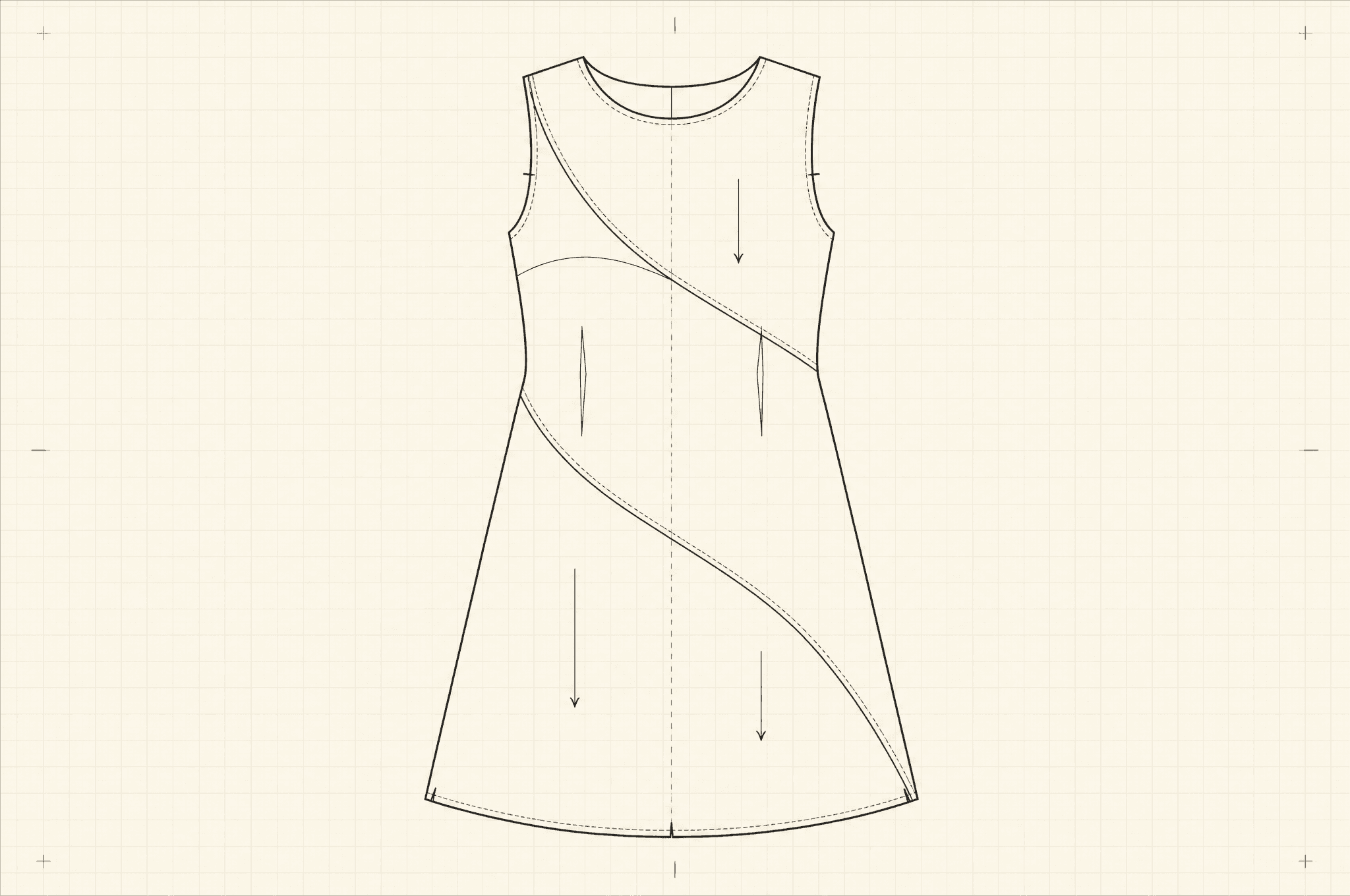
WON'T WORK · seam
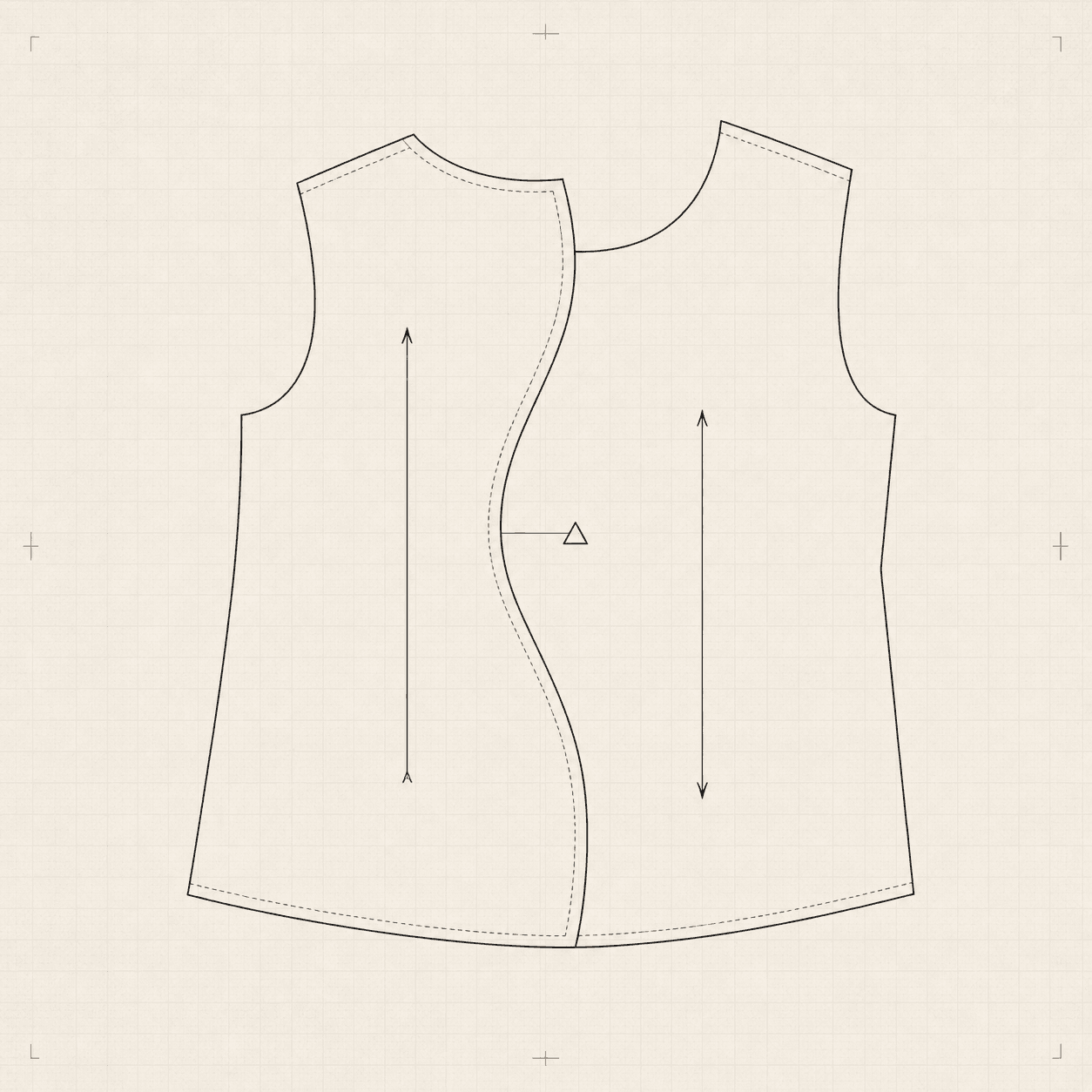
Here the seam is running through true bias. It crosses the grain a second time lower down. Cut as one continuous panel, the bias stretches under its own weight as soon as the piece leaves the table, and the two ends stop meeting the length they were drafted to.
AS DRAWN · dart
A single waist dart with its apex short of the fullest point. Ordinary shaping — nothing about it fights the grain.
NEEDS CHANGE · closure
The closure is drawn straight through the point where the spiral seam meets the centre line. A slider cannot pass a junction that is four layers of allowance thick.
Change
Move the closure about two centimetres clear of the junction, or stop it above the junction and finish the rest as a lapped opening.
NEEDS CHANGE · seam
The same seam exits at the hem across the bias again, so the hem edge will drop unevenly once it hangs.
Change
Break the spiral into three panels, each cut on straight grain, meeting at two clean junctions. The line reads the same from the front and every panel is now stable.
 01
01A photograph of a pencil drawing is enough. A flat, a digital line drawing, a page torn out of a notebook. Then one sentence: what is worrying you about it.
 02
02Every structural element the read can identify — seams, darts, pleats, pockets, collars, armholes, closures — is marked as made as drawn, needs changing, or will not work. The marking sits on top of your drawing; your drawing is not altered.
 03
03Not “consider simplifying”. The actual structure line, redrawn where it has to move, with the original underneath so you can see exactly what shifted and nothing else.
Being told a seam will not work is only half of it. What stops somebody without pattern-making behind them is the next question: then what does it become?
Drag across the drawing. On the left is the seam as you drew it. On the right is the same seam after the single change described below — and only that change.
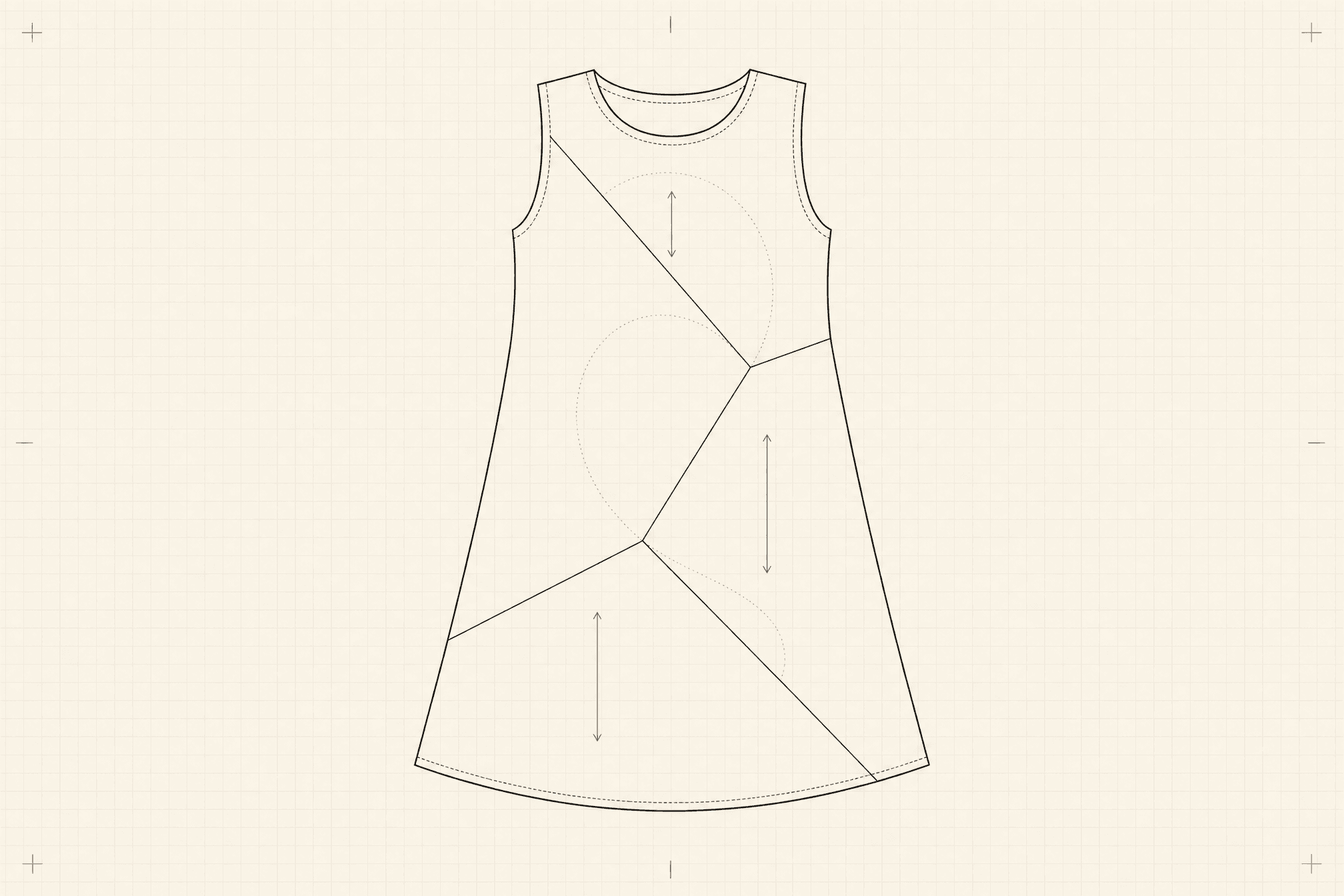
The one change
The spiral is broken into three panels, each cut on straight grain, meeting at two junctions. Seen from the front the line reads the same. Every panel is now stable, so the hem stops dropping and the seam stops growing. Nothing else about the dress is altered.
The marks land on your drawing, and your drawing might be green, ochre or red already. So each verdict is a different shape carrying a different label, and the colour only repeats what the shape and the label have already said.
AS DRAWN
Nothing about the geometry fights ordinary construction. That does not mean it is easy or cheap — it means the drawing does not have to move.
NEEDS CHANGE
You get the reason and you get the change: which line moves, which way, and by roughly how much. One change, drawn on top of your own line.
WON'T WORK
The reason is always structural and always specific. “This is not feasible” is exactly the sentence this service exists to replace.
The interface stays close to neutral for the same reason. A coloured interface would sit on top of your drawing and argue with it. Paper, graphite and one accent — that is the entire palette, so the loudest thing on the screen is always the sheet.
Not a disclaimer at the bottom of the page. A field in the result, never empty, that says out loud where a drawing stops being able to tell anyone anything.
The fabric. A stable twill and a loose crepe give opposite answers to half of the above.
Your target price. What is possible and what is affordable are different questions.
The equipment in the factory you end up using. Some machines make short work of what is written here as hard.
The quantity. A one-off can be handled in ways a run of five hundred cannot.
A factory with different equipment may say something else. This tells you what is generally hard and why — take it as a question to ask, not a verdict.
Twelve sheets, each with the verdict and the reason it carried. Read them as a sample of the language, not as a catalogue of rules — every one of these depends on a fabric that is not stated.
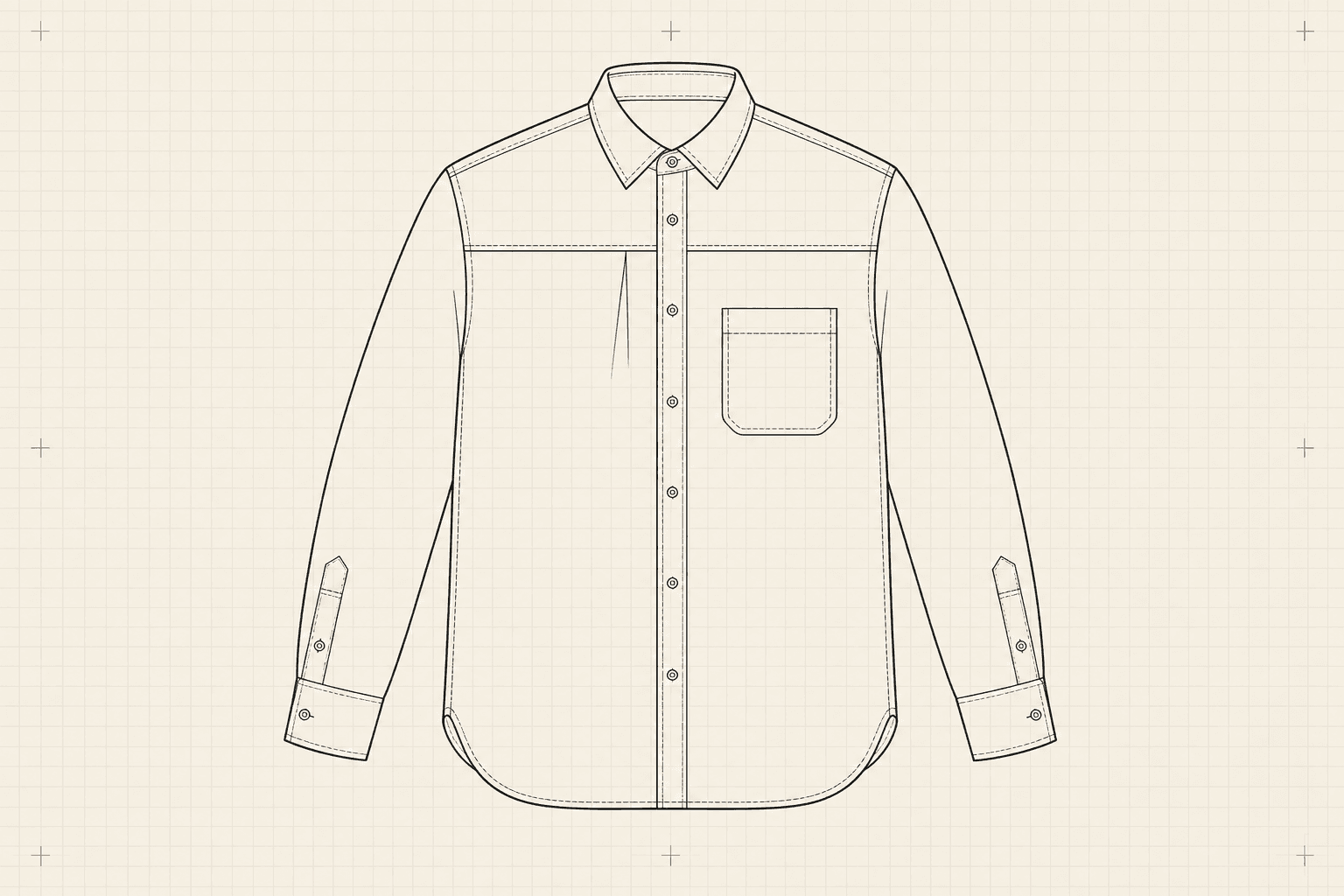
AS DRAWN
Shirt · yoke and box pleat
Yoke seam, box pleat and cuff placket all sit on straight grain. Nothing here fights itself.
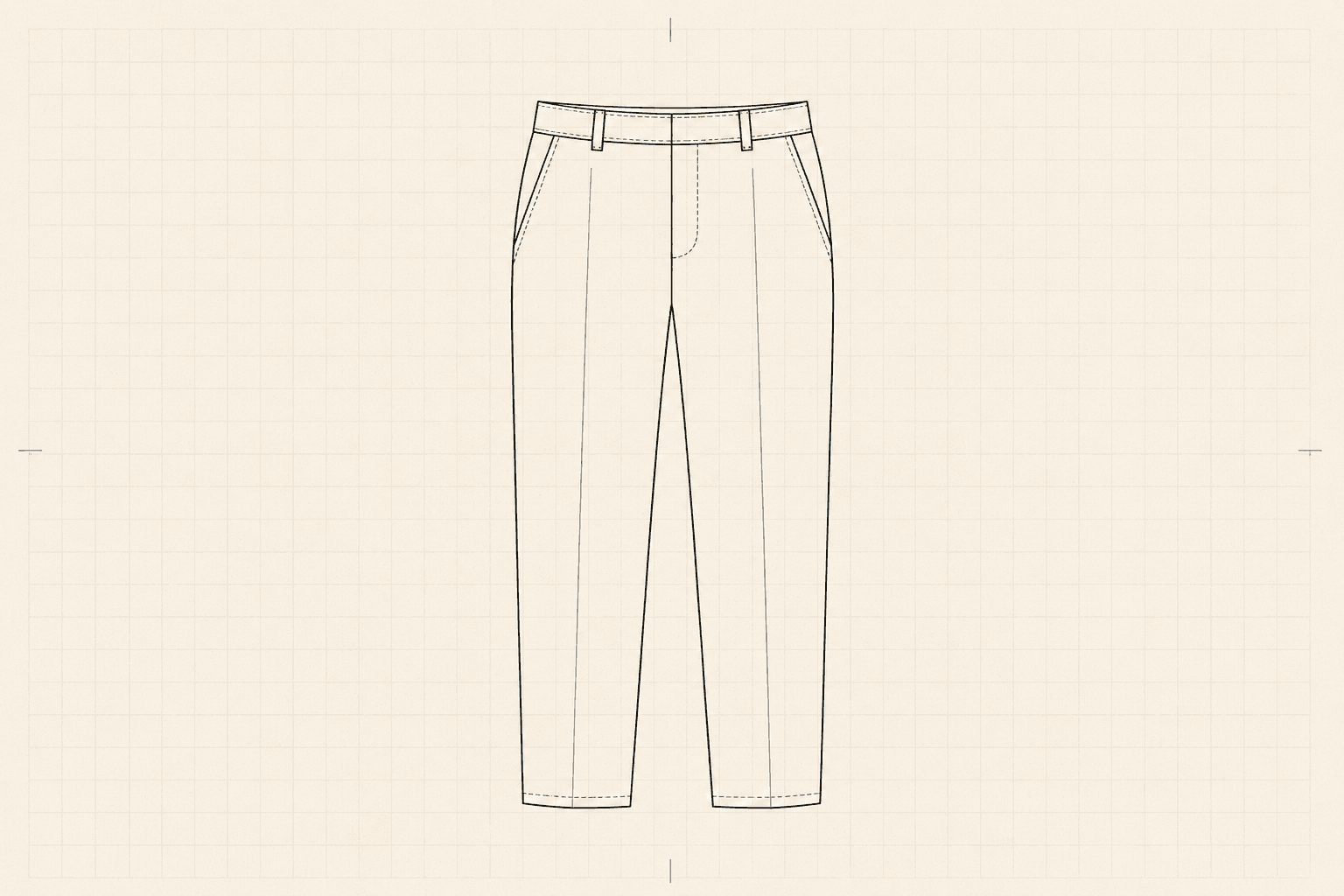
NEEDS CHANGE
Trouser · slant pocket
The pocket mouth is drawn on the bias and will gape after a week of wear. Stay-tape it, or rotate the opening toward the grain.
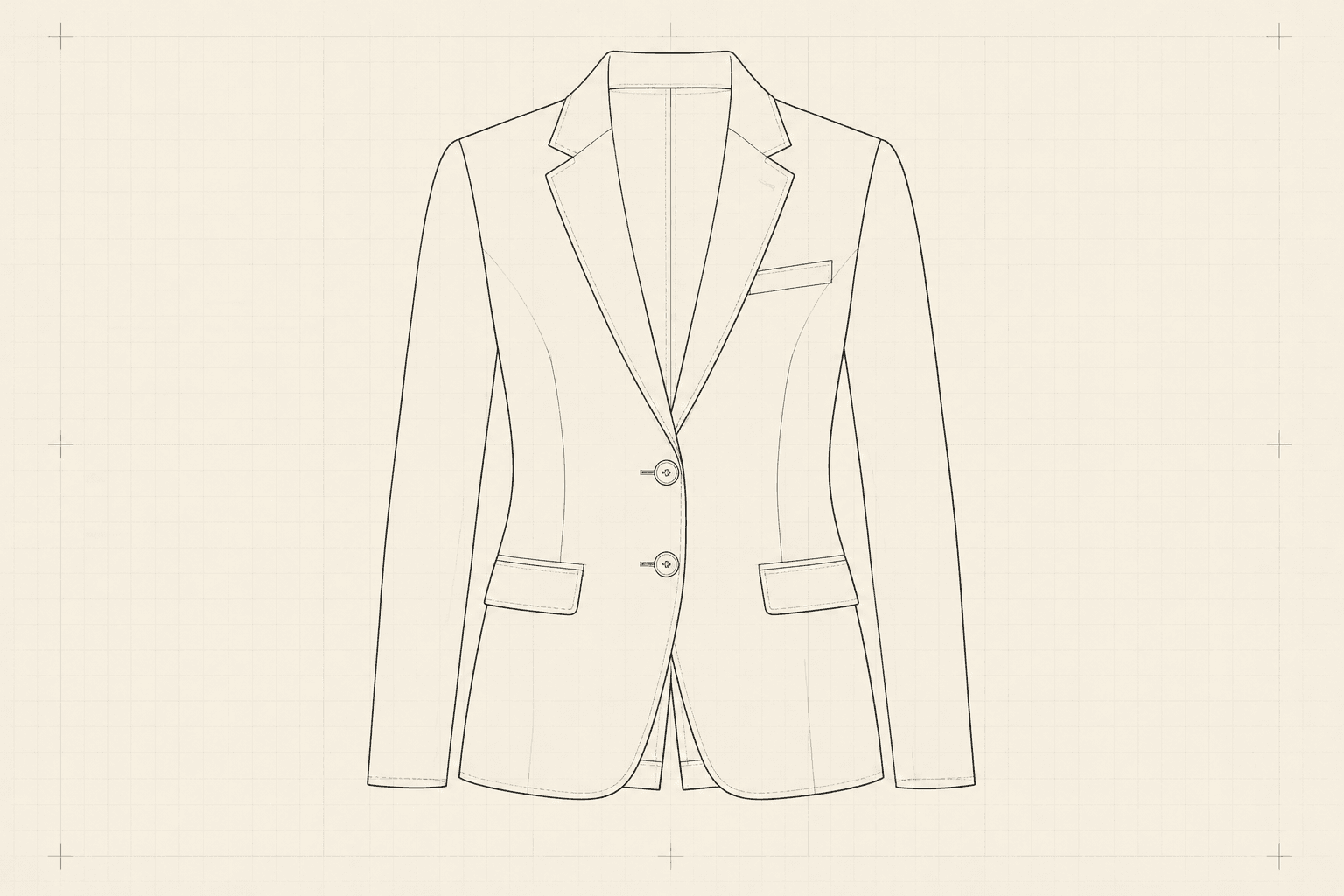
AS DRAWN
Blazer · notch lapel
Lapel roll line, chest welt and vent are conventional. The work is in the pressing, not the pattern.
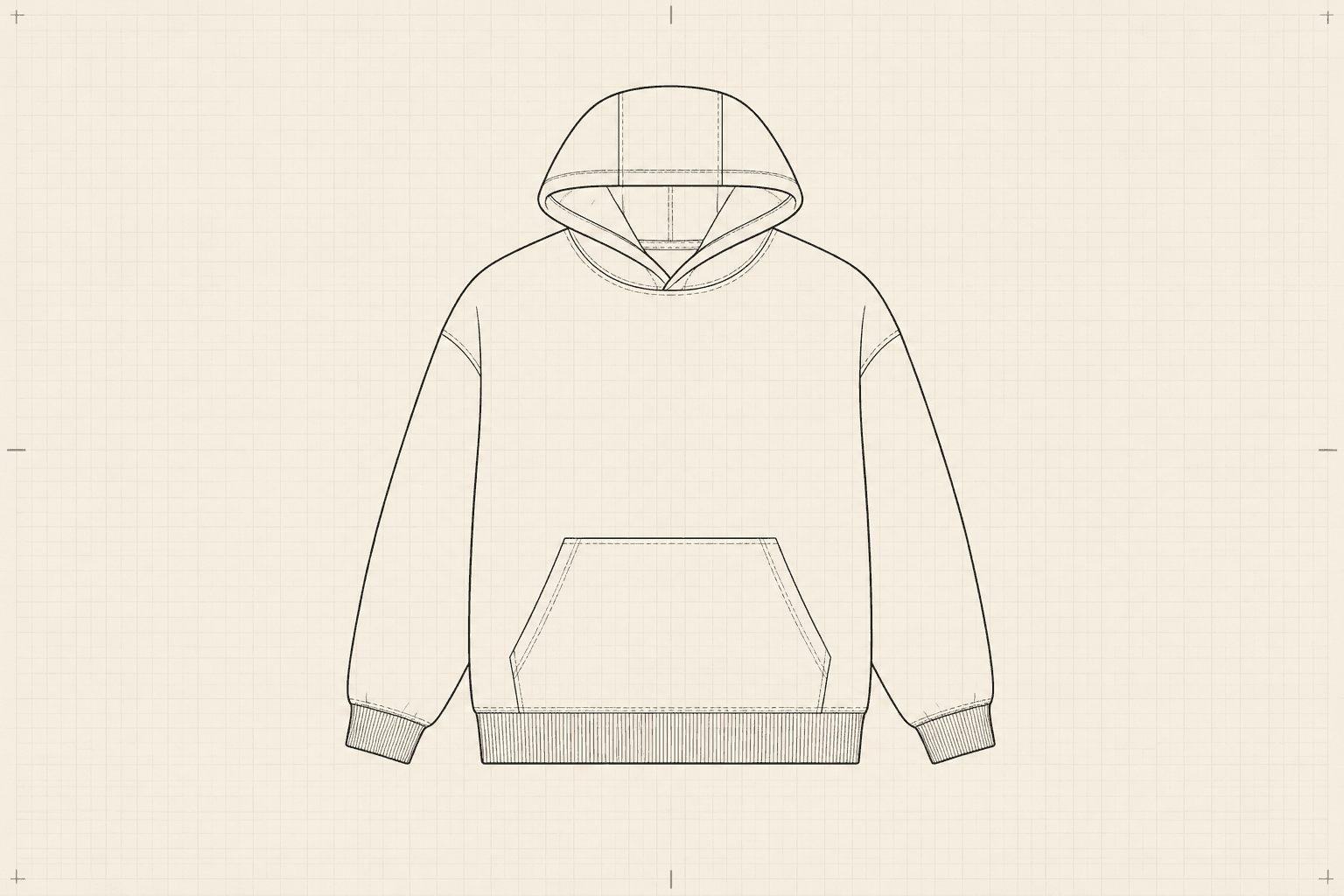
NEEDS CHANGE
Hoodie · two-panel hood
The hood is drawn shorter around the face than the neckline it attaches to. Add the difference to the hood, not the body.
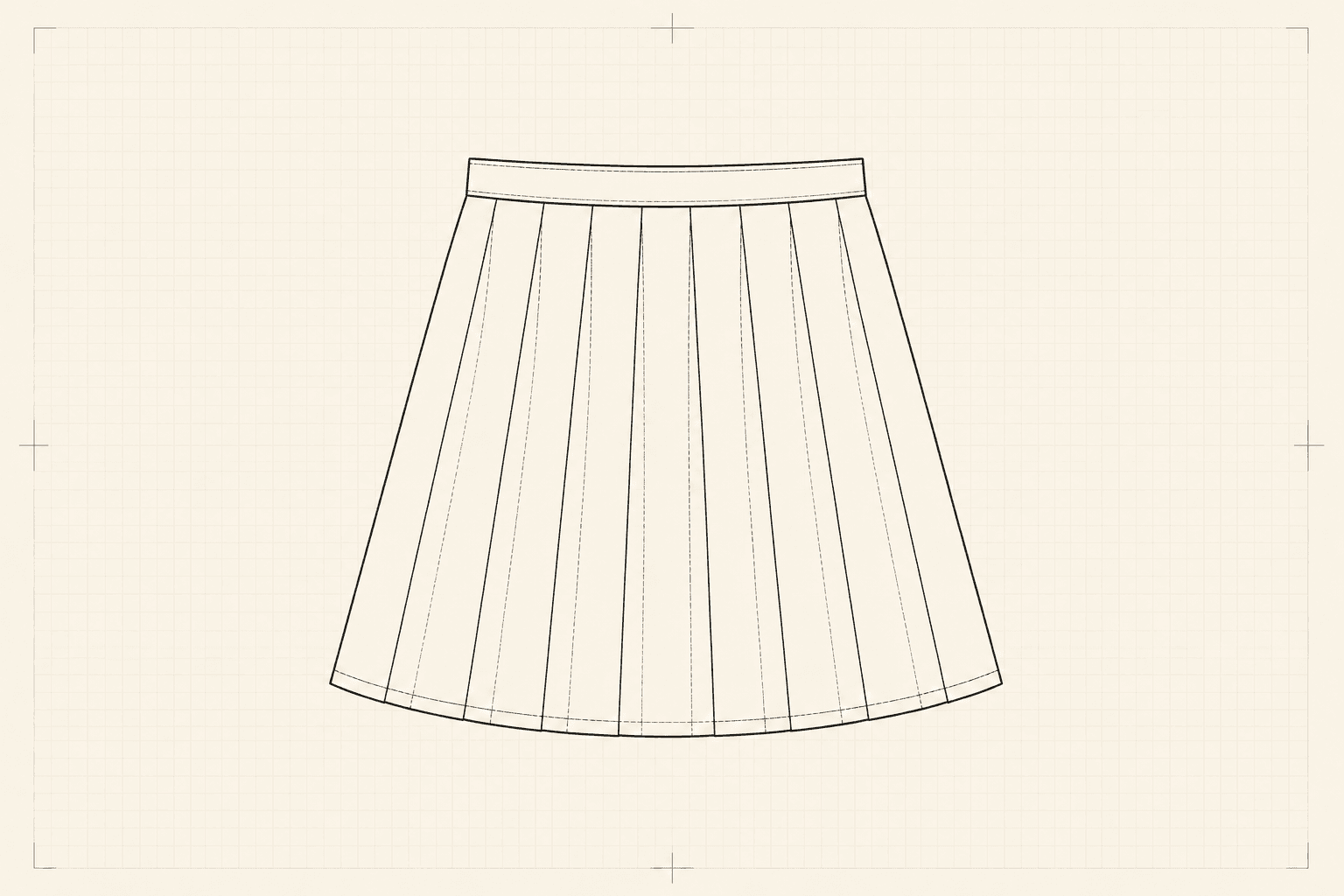
WON'T WORK
Skirt · knife pleats
Pleats drawn parallel on a flared block cannot stay parallel once the hem widens. They will splay or the hem will pull up.
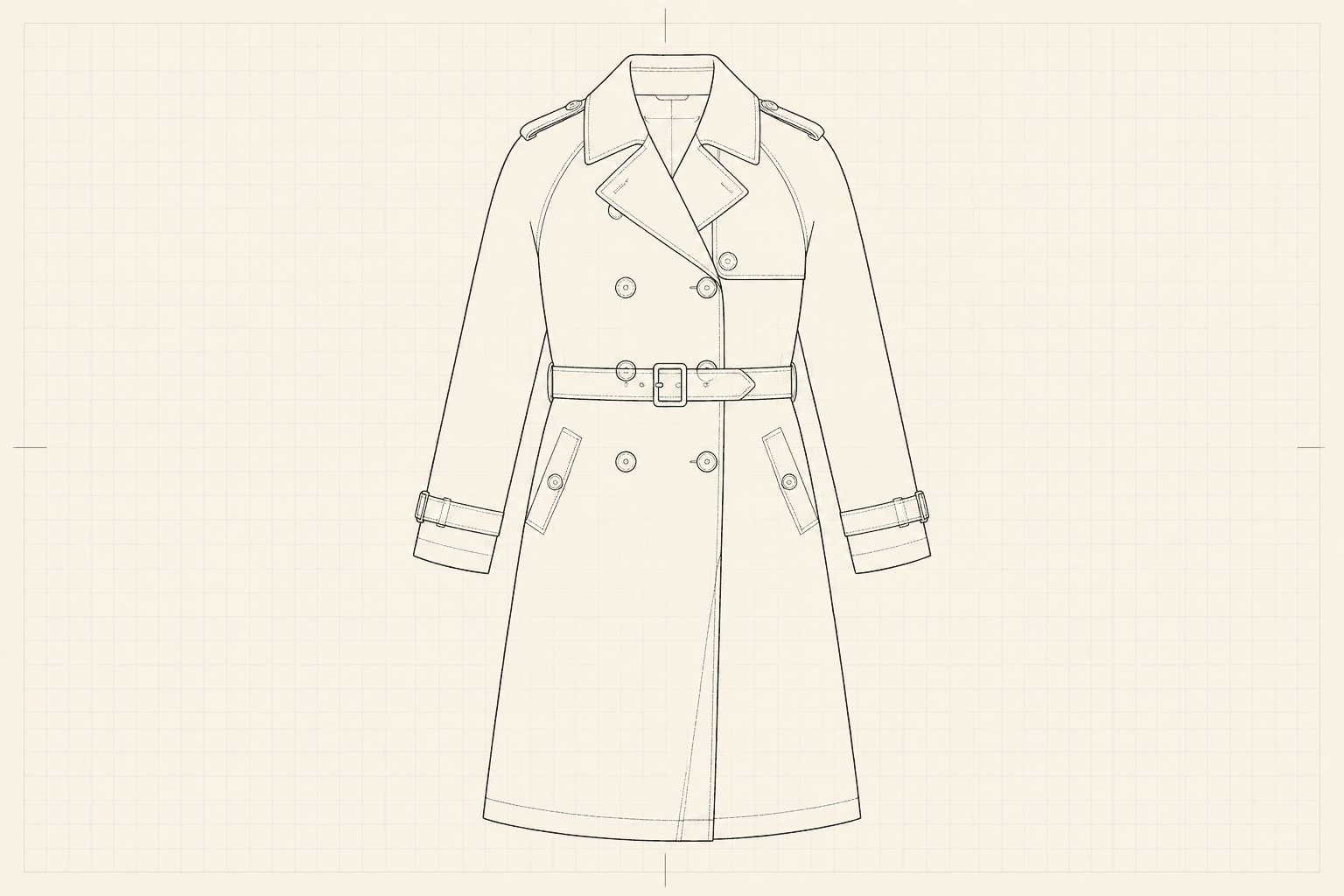
NEEDS CHANGE
Trench · raglan and storm flap
The raglan seam meets the storm flap at the same point on both sides, stacking four layers under the buttonhole. Move one of them.
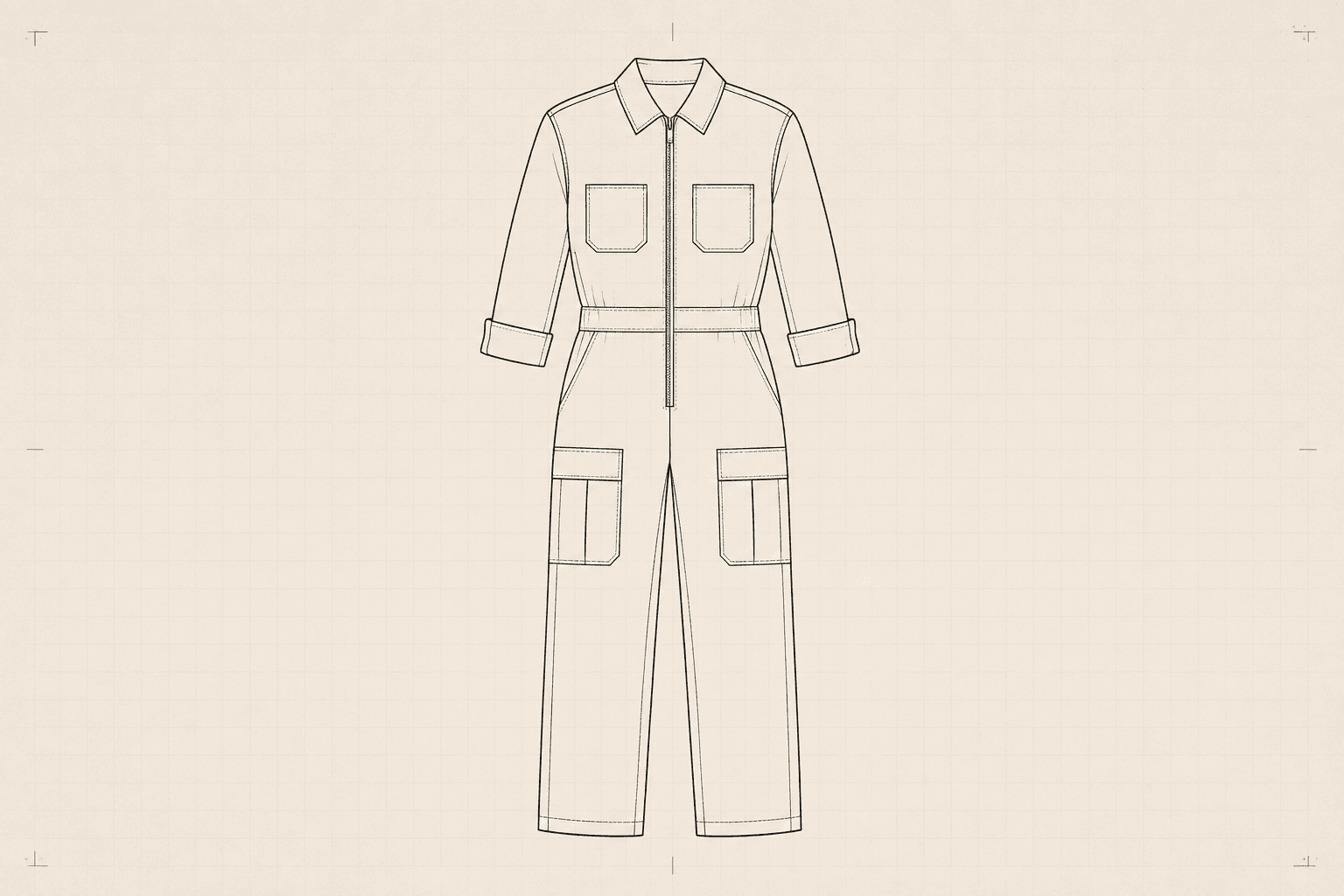
AS DRAWN
Jumpsuit · full-length closure
The closure runs the whole front on a single straight line. Long, but nothing about it is difficult.
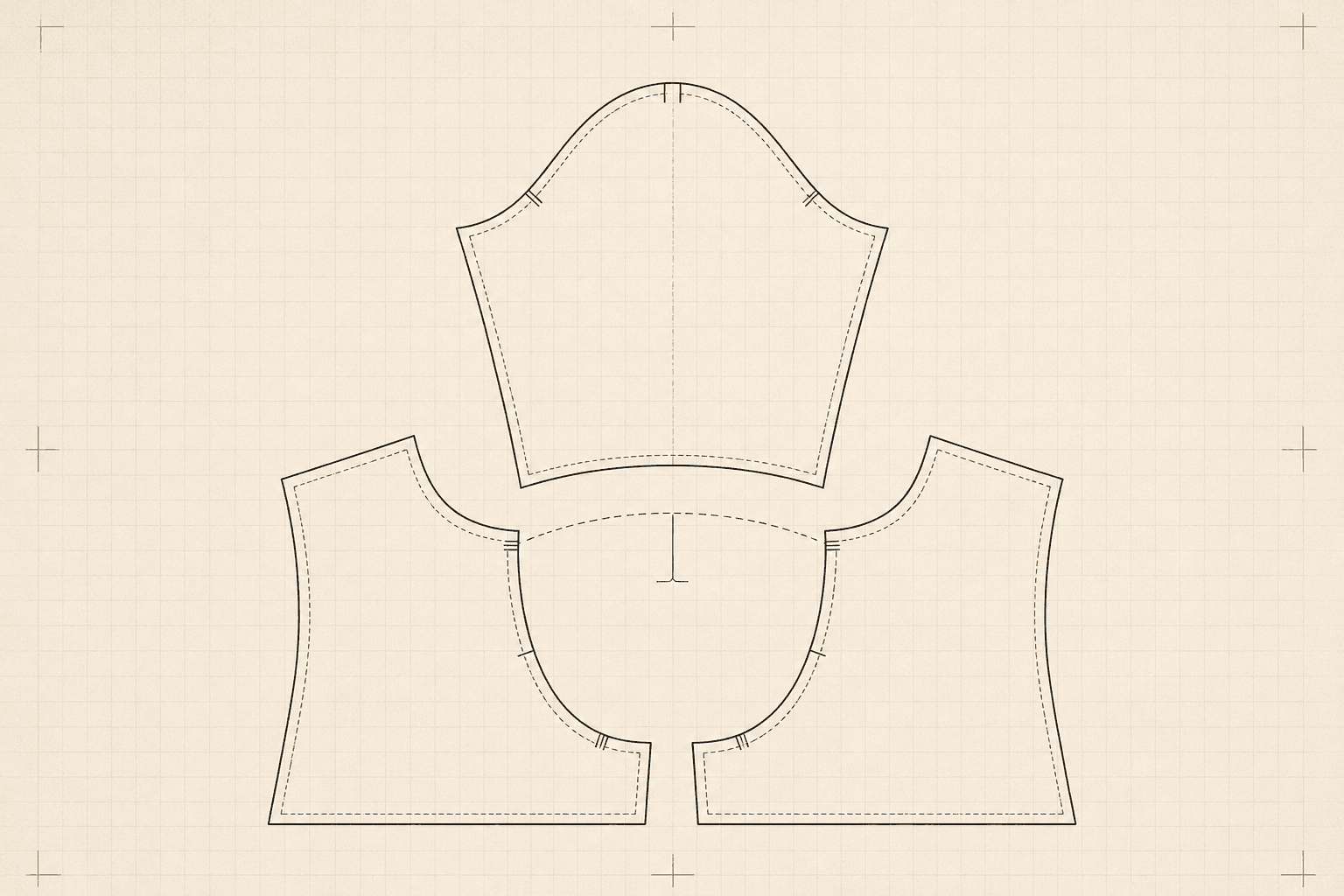
NEEDS CHANGE
Sleeve · cap and armhole
The cap carries more ease than this fabric can absorb. Take it out of the cap height, not out of the width.
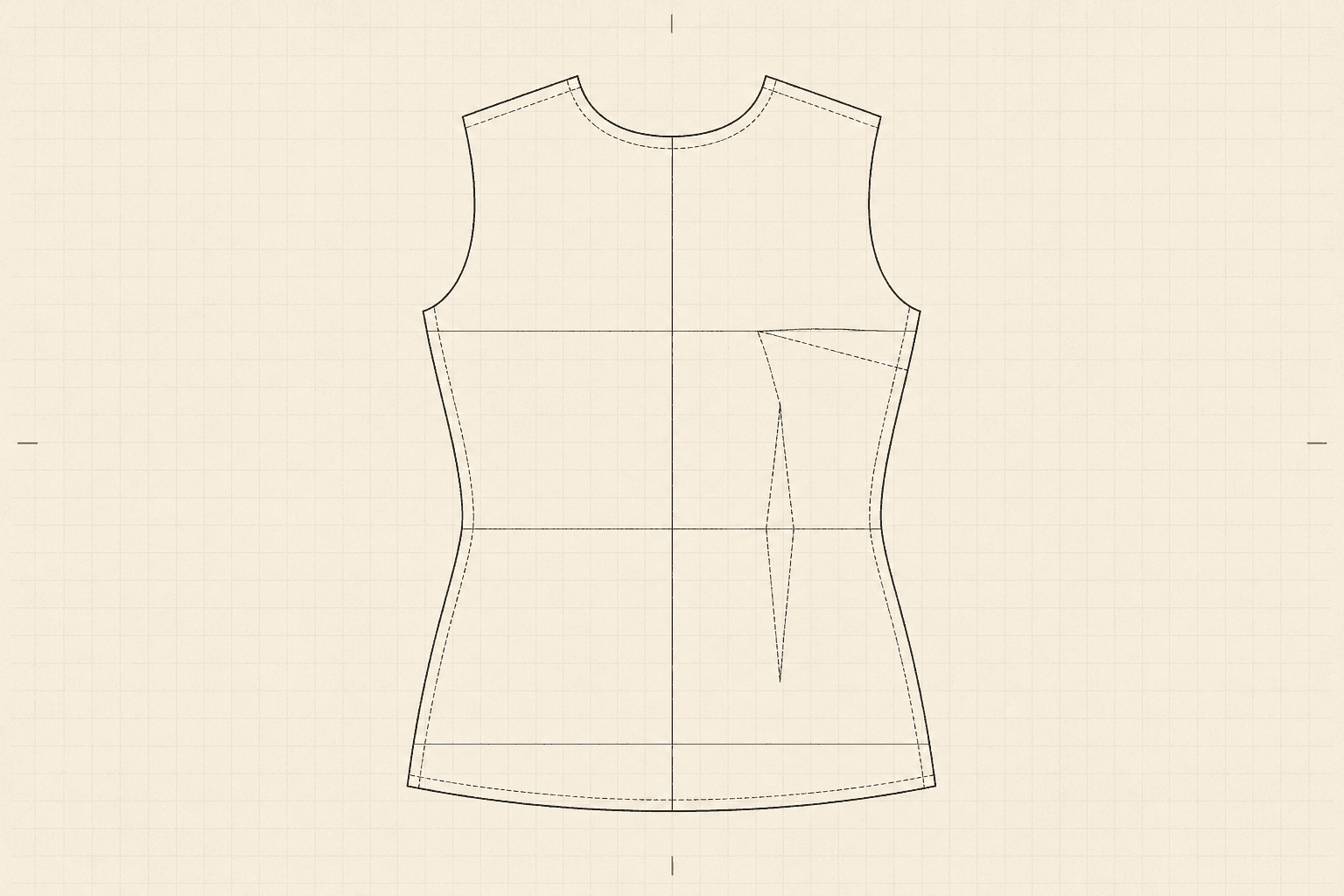
AS DRAWN
Bodice block · dart shaping
Two darts, both ending short of the fullest point. Textbook, and it will behave like it.
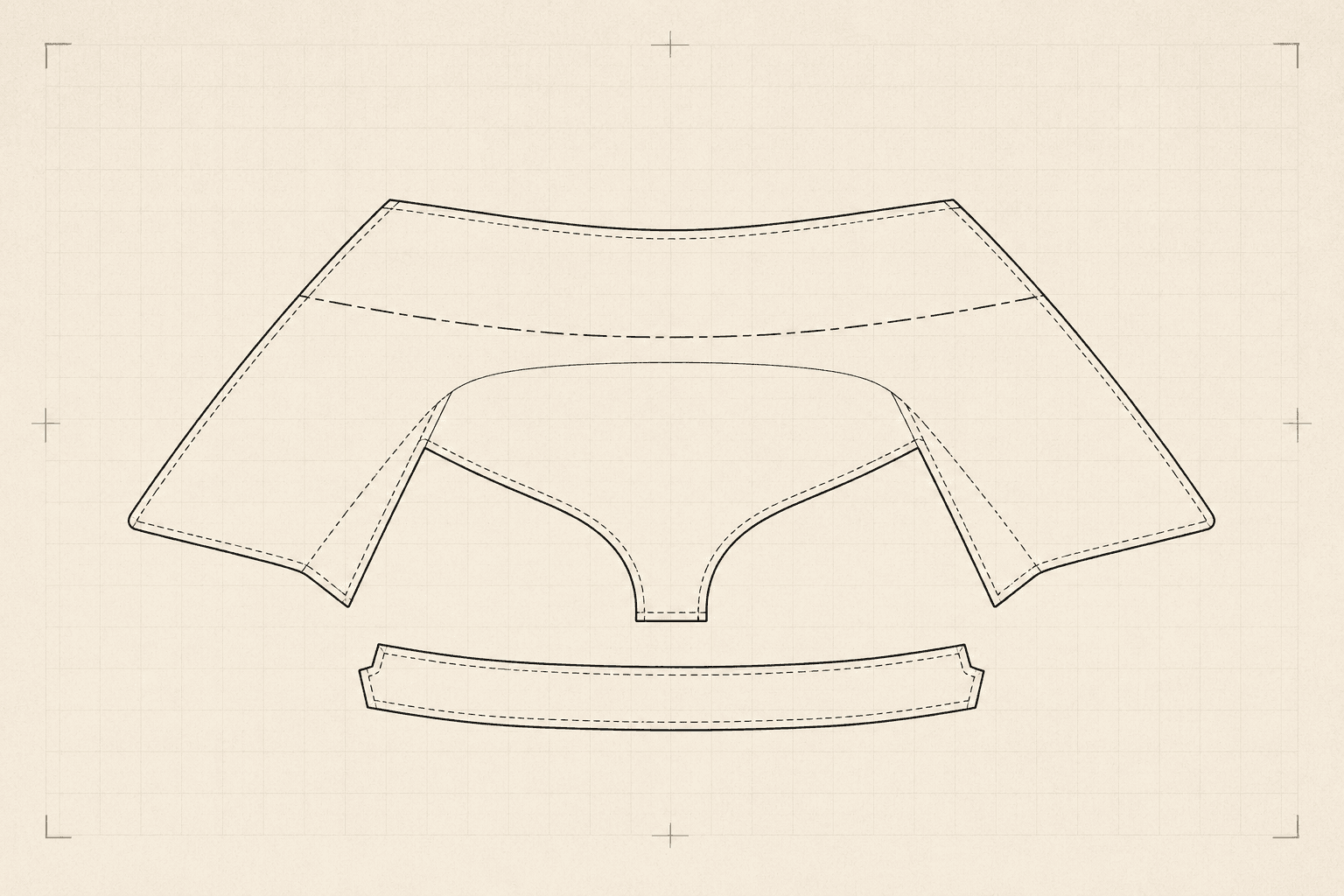
NEEDS CHANGE
Collar · stand and fall
The fall is drawn the same length as the stand, so the collar will not cover its own seam. Add to the outer edge of the fall.
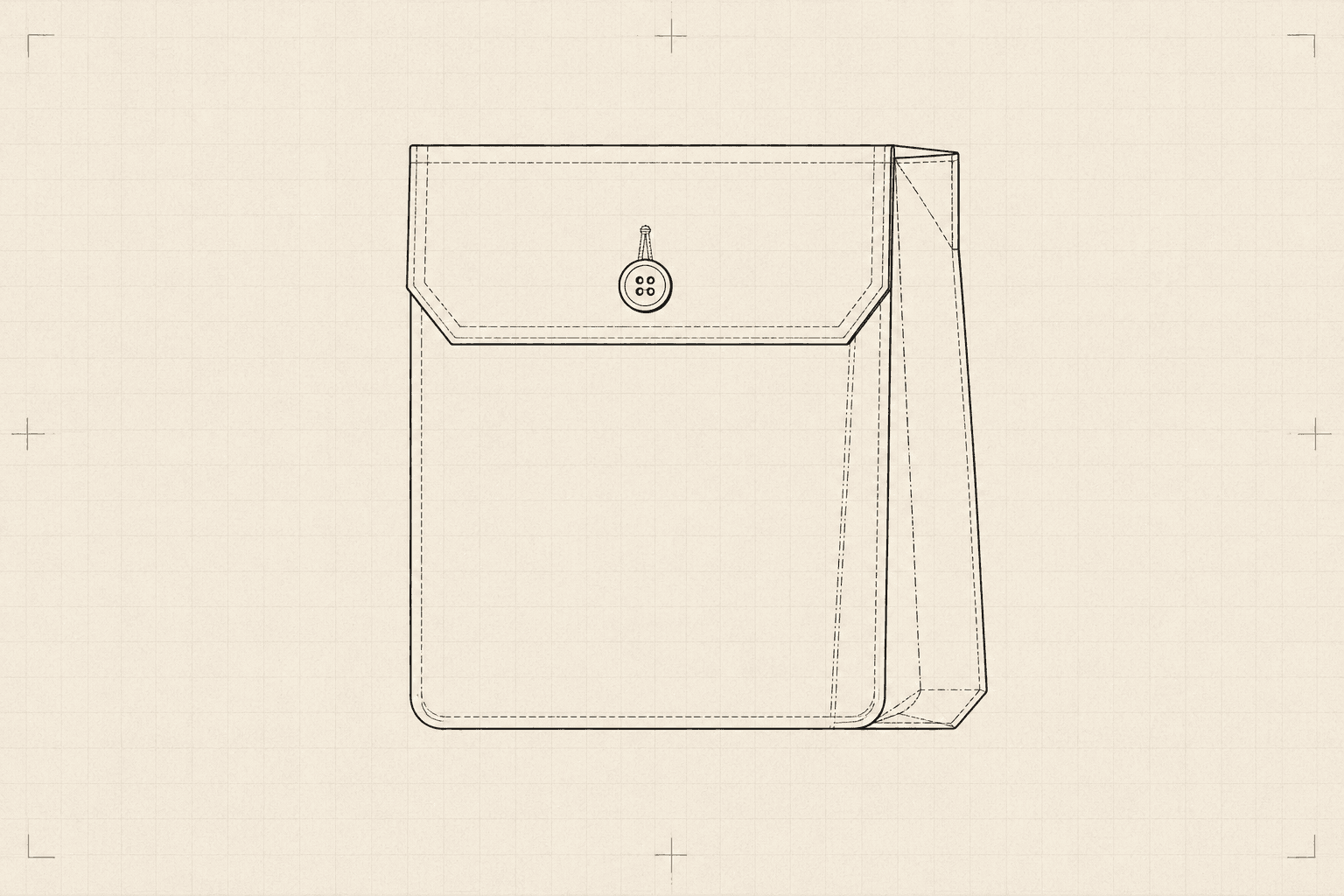
WON'T WORK
Pocket · bellows gusset
The gusset is drawn as a straight strip but must turn two corners. Straight, it cannot reach the second corner without buckling.
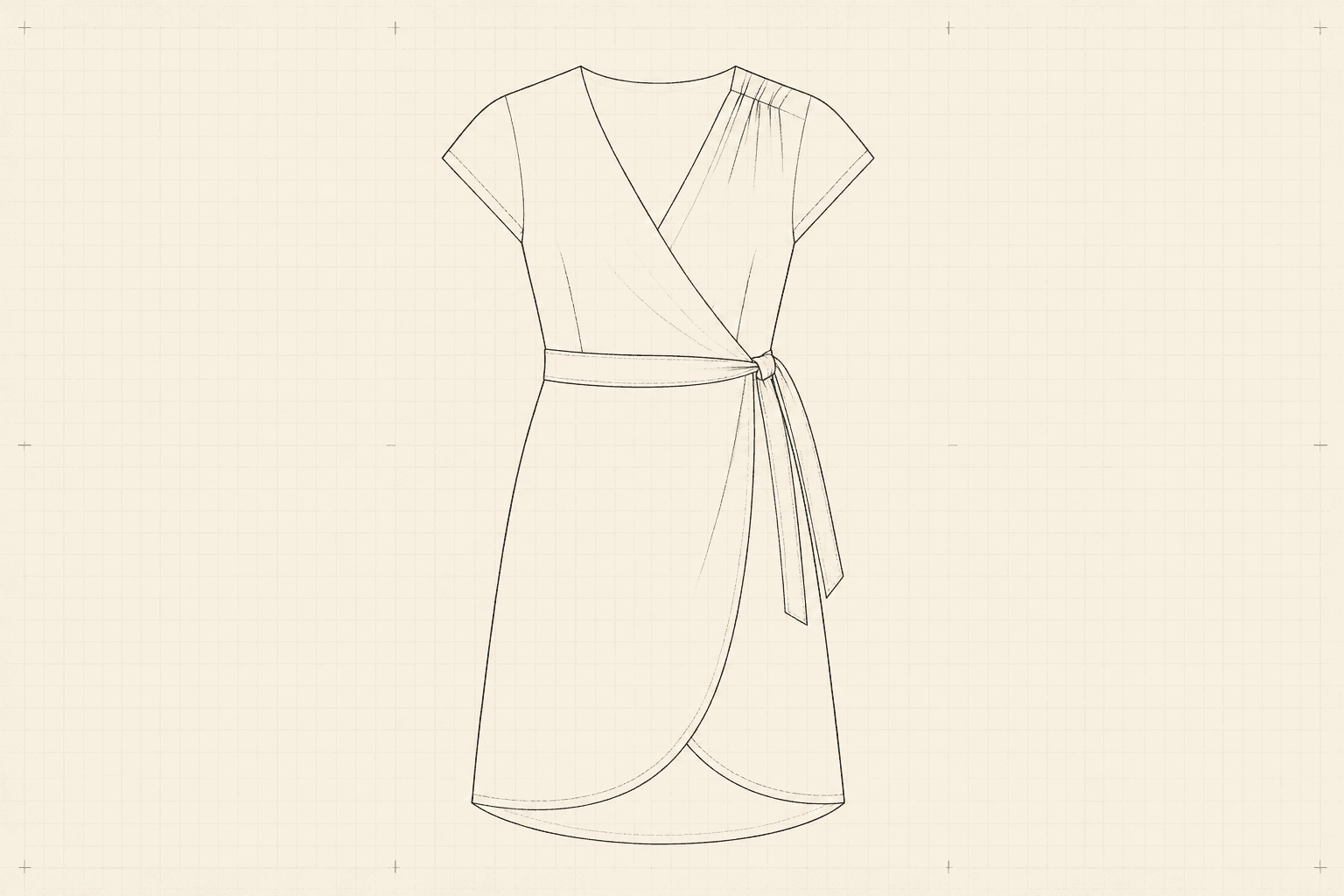
NEEDS CHANGE
Wrap dress · crossover front
The crossover edge is a long bias line and will grow. Cut it with a facing on the same grain, or the wrap will not stay closed.
Written down here rather than buried in the terms, because they are the shape of the service and not the small print around it.
No introductions, no directory, no sampling arranged, no minimum order quantities discussed. Nothing is brokered between you and anyone.
Not a price, not a range, not a rough idea. Cost depends on fabric, quantity and who is making it, and this service knows none of the three.
There is no sentence anywhere on this site that says a design is ready to make once you have applied the changes. That is a promise nobody can make from a drawing.
Only the structure line that has to move is redrawn. Your silhouette, your proportions and your styling are yours. A service that redesigns your dress has stopped answering your question.
The free plan reads three sketches a month and gives you the whole marking: every verdict, every reason, and everything the read cannot know. The sheet you export carries a watermark — placed clear of the reasons, never across them.
What it does not include is the revision drawing. That is the part you cannot work out for yourself without a pattern-making background, and it is the part that lets you go round again — because revising a sketch is a loop, and three a month does not cover one turn of it.
USD · IVA 23% included
$0no card required
Enough to find out whether the read tells you anything you did not know.
$12per month, renews monthly
For the part that actually blocks you: what the change is.
$34per month, renews monthly
For working through a set of drawings, revision after revision.
Allowances reset each period and do not carry over. There are no credit packs and no stored balance. Full pricing and what each action costs.
The factory. They can see your fabric, their machines and their operators. This service can see none of those things.
What you have here is a judgement about general garment-making practice, together with the reason behind it. If a factory disagrees, the useful move is to take the reason to them and ask how they get around it — that conversation is worth more than either answer on its own.
No. This service does not recommend factories, does not arrange sampling, does not quote, does not discuss minimum order quantities and does not broker anything between you and anyone.
It reads a drawing and tells you what is generally hard about it and why. What you do next is entirely yours to decide.
No. Uploaded sketches are never used to train or fine-tune any model, and they are never used as examples anywhere on this site or elsewhere without your separate, explicit consent for that particular sketch.
Sketches are stored encrypted. You can delete any individual sketch, or your whole account and everything in it, from the workspace at any time. Deletion removes the file from live storage immediately and from backups within 30 days.
You do, entirely. Copyright in your sketch stays with you and this service claims no rights in it of any kind — not a licence to display it, not a licence to adapt it, nothing beyond what is strictly needed to produce your own read and show it back to you.
The annotated sheet and the revision drawings produced from your sketch are yours to use however you like.
It is a machine reading of a drawing, and it can misread one. It can mistake a style line for a seam, miss a detail that is faint on the page, or call something hard that your particular fabric makes trivial.
That is why every judgement is published with the reason behind it: a reason you can check is worth more than a verdict you cannot. Nothing here is professional pattern-making advice, and nothing here is a promise that anything can or cannot be produced.
Cancel at any time from the billing page; it takes the same number of steps as subscribing. Access continues to the end of the period already paid for.
As a consumer in the EU you have 14 days to withdraw from a distance contract. Because this is digital content supplied immediately, that right ends early only if you have expressly asked for supply to start within the 14 days and have acknowledged that doing so ends the right — which is why checkout asks for both of those separately, as two boxes you tick yourself. If you do not tick them, supply waits and the 14 days run in full.
It resets on your renewal date and does not carry over.
There are no credit packs, no top-ups and no stored balance to buy. The allowance measures use of the service — it is not currency, not stored value, not refundable and not transferable. If you routinely run out, the plan above is the answer.
Yes. You must be at least 18 to hold an account and to subscribe. Accounts are not offered to children, and the service is not directed at them.
Four things, always, and they are printed on every read: the fabric, your target price, the equipment in the factory you end up using, and the quantity you plan to make.
Any of the four can turn a judgement on this page around completely. That is not a hedge — it is the boundary of what a drawing alone can tell anyone.
Start
Three a month, free, no card. If the read tells you something you already knew, you have lost nothing. If it tells you why a seam you were proud of will not survive being cut, you have saved a sample.


